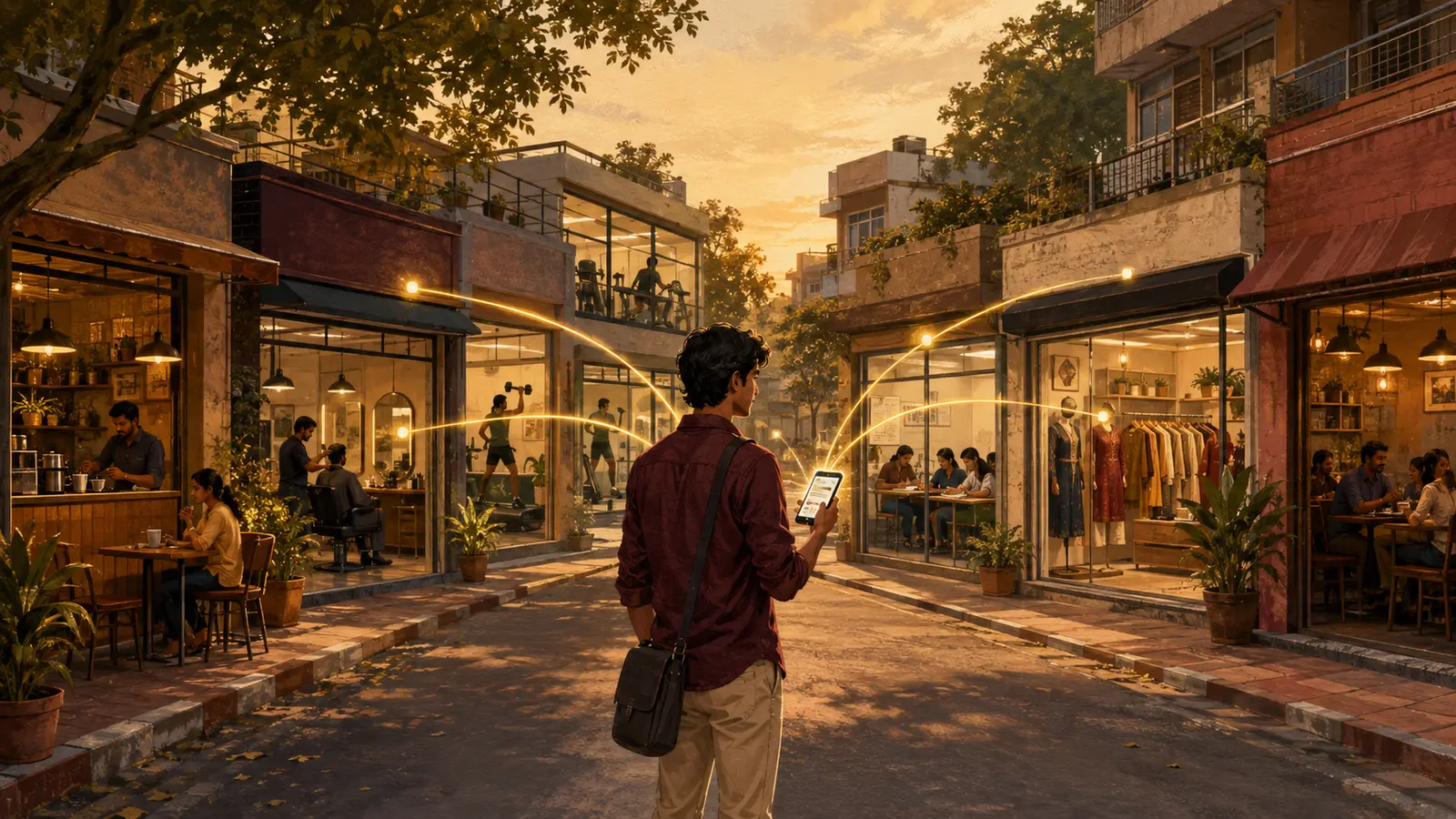

Regional confidence, cheaper production and direct distribution are moving India’s creative centre away from a few familiar pin codes.
The old route to becoming visible is weakening
For a long time, Indian creators who wanted national attention were expected to move toward a metro, adopt a more mainstream language or copy the style of people who were already visible. Production networks, agencies, media coverage and brand budgets were concentrated in a few cities. Digital distribution has weakened that gatekeeping.
YouTube's own India reporting describes creation expanding beyond metropolitan centres as smartphones and data became cheaper, with content appearing not only in major Indian languages but in regional dialects and highly local formats. The platform has also highlighted creators whose identity is closely tied to their region rather than hidden behind a generic national style.
Local specificity is becoming an advantage
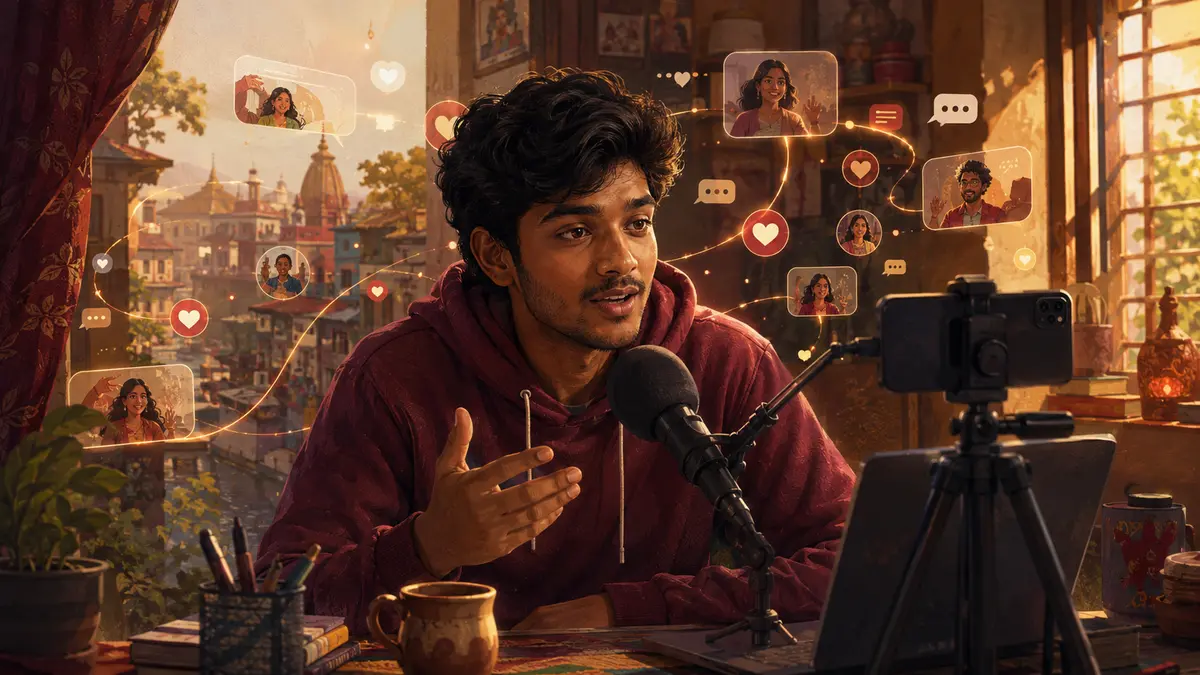
The important shift is not that every regional creator suddenly has a massive audience. Discovery is still difficult and platform algorithms are competitive. The shift is that being specific about place is no longer automatically a disadvantage. Food, family dynamics, humour, school life, transport, work and local slang can become the reason an audience remembers a creator.
The internet is not eliminating regional identity. In many cases it is giving that identity a distribution system.
YouTube has pointed to creators and communities built around regional cultures, dialects and niche interests. That matters because digital distribution changes the economics of specificity. A creator does not need every viewer in India to understand every reference. They need enough viewers to care deeply, and recommendation systems can then connect that work with similar audiences elsewhere.
Language barriers are getting easier to cross
Subtitles, multi-language audio and automatic dubbing are making it easier for a creator to keep their original voice while reaching people outside the language in which the content was first made. YouTube has expanded auto-dubbing and multilingual features specifically to help content travel across language boundaries.
That does not mean every creator should dub everything. Some humour, rhythm and emotion depend on the original language. But the technology reduces the old pressure to choose between cultural specificity and wider reach. A creator can remain recognisably local and still become understandable to viewers elsewhere.
The creator economy is becoming economically meaningful
In 2025, YouTube said more than 100 million channels in India had uploaded content in the previous year and that it had paid more than ₹21,000 crore to creators, artists and media companies in India over three years. Platform figures should be treated as company-reported data rather than neutral market statistics, but they still show the scale of economic activity now attached to digital creation.
The opportunity is not limited to celebrity creators. A creator with a smaller but trusted audience can build revenue through brand work, memberships, products, services or community-led businesses. That is especially relevant outside metros, where a creator may understand a customer group that a national campaign treats only as a demographic.
Brands should stop treating regions as translations
The lazy version of regional marketing takes a national campaign and changes the language. The stronger version changes the insight. A creator who understands how people in a town or region actually speak, joke and make buying decisions can contribute much earlier than the final voiceover.
That means brands should involve regional creators in concept development, not only distribution. It also means creators have to protect the trust that made them useful in the first place. A local audience notices quickly when a recommendation sounds imported, scripted or disconnected from the creator's usual point of view.
Small-town does not mean small ambition
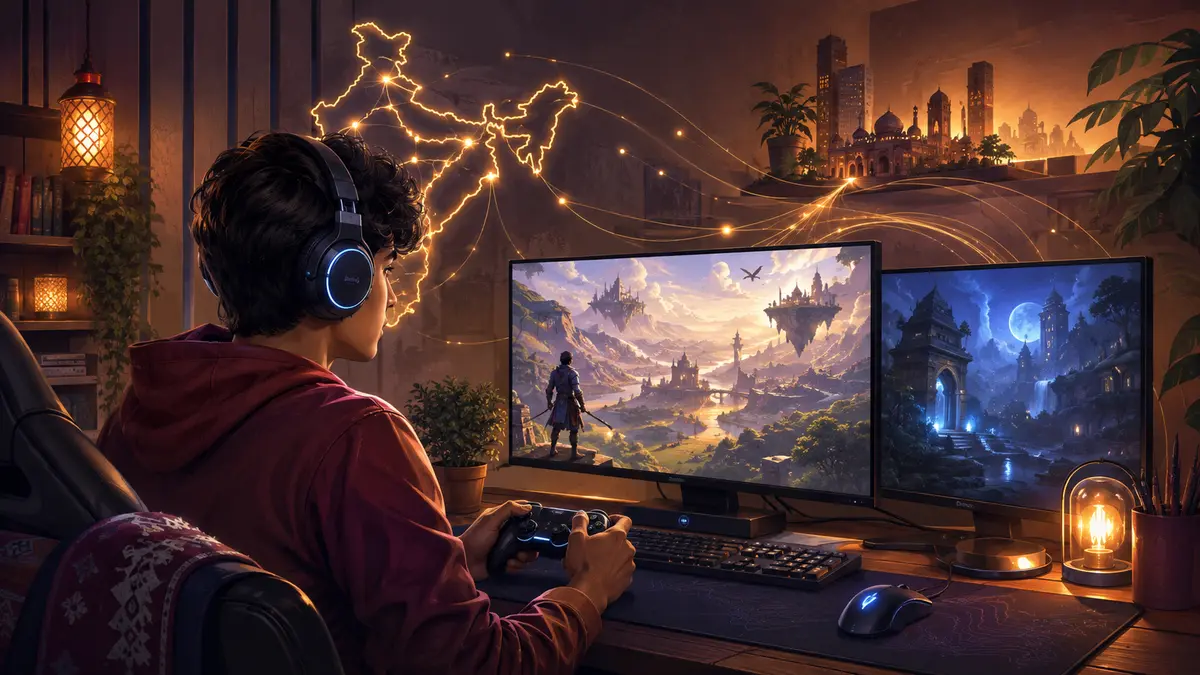
The phrase “small-town creator” can become limiting if it treats geography as the entire identity. Creators outside metros work across technology, gaming, education, comedy, food, finance and entertainment. Their location may shape the voice, but it does not define the ceiling.
What digital platforms have changed is the order of operations. A creator can build an audience first and decide later whether moving to a larger city would help production or partnerships. Geography is becoming a choice in the growth strategy rather than an entry ticket to relevance.
The internet's accent is becoming plural
India's creator economy is not moving from one dominant accent to another. It is becoming more fragmented, multilingual and specific. That can make the internet feel less uniform, but also more representative of the country using it.
The creators with the strongest long-term advantage may be the ones who do not sand away where they come from. They can use better production tools and broader distribution while keeping the details that make the work recognisable. The result is not a rejection of the mainstream. It is a wider definition of what the mainstream can sound like.