

A numbers-first playbook for building a local social media management agency in India, from finding nearby clients and packaging the service to pricing, retention and realistic unit economics.
India already has an enormous online audience and a vast base of small enterprises. That does not mean every neighbourhood shop needs an agency. It does mean there is a real market for people who can help local businesses turn social platforms into a consistent customer-acquisition channel instead of an abandoned gallery of festival posters.
Why this market exists
DataReportal's Digital 2026 India report says India had about 1.03 billion internet users at the end of 2025 and 500 million social-media user identities in October 2025. Those figures are not the same as unique customers for a local business, but they show how normal digital discovery has become.
The Ministry of MSME's live Udyam dashboard, checked in August 2026, showed more than 9.3 crore combined Udyam and Udyam Assist registrations nationally. West Bengal alone was above 62 lakh. The exact dashboard count keeps changing as registrations are added, but the direction is rather hard to miss: the addressable small-business base is enormous.
The advertising money is moving in the same direction. FICCI-EY's 2026 media and entertainment report estimates that digital advertising rose from ₹749 billion in 2024 to ₹947 billion in 2025. Within those totals, SME and long-tail advertisers rose from ₹278 billion to ₹363 billion.
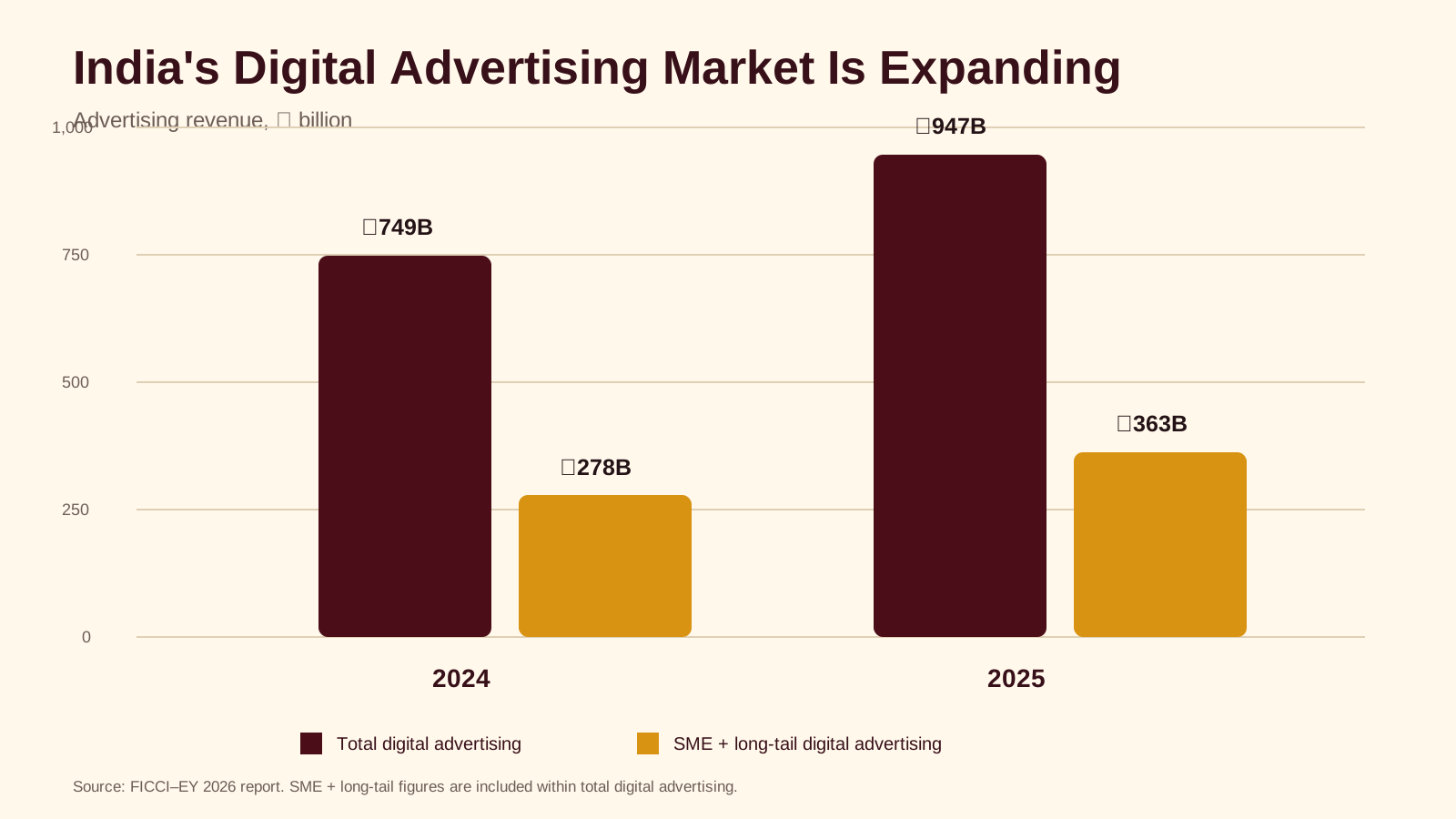
Source: FICCI-EY 2026 report. SME and long-tail spending is included within total digital advertising, not added on top.
What are you actually selling?
Do not sell a foggy promise such as “I manage social media.” Sell a defined monthly operating service. A starter local-agency offer can include Instagram and Facebook content, short-form video editing, promotional creatives, captions, profile optimisation, a monthly content calendar, Google Business Profile updates, basic analytics and a clear route for customers to enquire through WhatsApp or a website.
The client should know what will be delivered, how often it will be delivered and what success will be measured against. Followers and likes can be useful indicators, but enquiries, calls, bookings, store visits, direction requests and repeat customers are much closer to the reason a business is paying you.
Who should you sell to first?
The strongest starter prospects usually have repeat customers, visual products or services, local discovery and a transaction value high enough to justify marketing.
- Cafés and restaurants: food, drinks, offers, events, new menu items and customer moments provide a steady content supply.
- Salons and beauty businesses: services, before-and-after work, appointments, testimonials and seasonal offers are naturally visual.
- Gyms and studios: facilities, trainers, classes, memberships and educational content can be turned into recurring formats.
- Clothing boutiques: new arrivals, styling, festival collections and limited stock create frequent reasons to post.
- Coaching centres: admissions, schedules, results, educational snippets and announcements can be organised into a practical content calendar.
- Realtors and property businesses: listings, locality explainers, construction updates and buyer FAQs work well because one qualified lead can be valuable.
Who should you avoid?
A business is a weak prospect when the owner refuses to spend on marketing, cannot handle more enquiries, has no usable product or service information, expects guaranteed sales, or wants unlimited daily work for a token fee. A client who creates a loss every month is not a client. It is a recurring invoice-shaped problem.
Step 1: choose one or two niches
Start narrow. Cafés plus boutiques, or salons plus gyms, is more workable than trying to become the universal marketing department for every business in town. A narrow starting niche lets you reuse research, content formats, sales language and production systems.
Step 2: build three honest sample projects
Create concept work showing an existing weak post and a stronger redesign, a Reel idea, a promotional creative, a profile clean-up and a seven-day content calendar. Label speculative work as concept work. A fake client list may impress someone for five minutes and damage trust for much longer.
Step 3: build a local prospect database
Use Google Maps, Instagram, local directories and ordinary street-level observation. Record the business name, category, location, social handle, last-post date, contact route, obvious marketing problem and outreach status. Thirty researched prospects are more useful than three hundred random usernames.
Step 4: audit each prospect before contacting them
Spend five minutes finding three concrete problems. Examples include no post for weeks, outdated offers, weak photography, inconsistent branding, no WhatsApp action, unanswered comments, old Google Business information or no useful short-form video.
Then lead with the problem, not your biography. “Your menu photography is strong, but the page has been inactive for three weeks and there is no clear reservation route” is a business conversation. “Hello sir, I am a social media manager” is one more message competing for residence in the owner's spam folder.
Step 5: sell a clear package
The following prices are an illustrative starting structure, not an industry rule.
Starter: ₹4,999 per month
- 8 static posts
- 4 promotional creatives
- Captions and basic profile optimisation
- Monthly content calendar
Growth: ₹7,999 per month
- 8 to 10 posts
- 4 Reels
- Stories and promotional creatives
- Monthly calendar and basic analytics
Business: ₹11,999 per month
- 12 to 16 posts
- 6 to 8 Reels
- Stories and promotional campaigns
- Google Business Profile updates
- Monthly analytics and content strategy
Advertising spend should be billed separately from the service retainer. Otherwise a ₹10,000 “package” can quietly become ₹6,000 of ad spend, ₹4,000 of labour and precisely zero room for the inconvenient concept known as profit.
Step 6: understand the unit economics
A service business should track revenue, direct costs and time. The scenarios below are illustrations, not forecasts or guaranteed earnings.
- Three clients: ₹6,000 average retainer produces ₹18,000 monthly revenue. With ₹3,000 of operating costs, the illustrative operating contribution is ₹15,000.
- Five clients: ₹8,000 average retainer produces ₹40,000 monthly revenue. With ₹8,000 of operating costs, the illustrative operating contribution is ₹32,000.
- Eight clients: ₹10,000 average retainer produces ₹80,000 monthly revenue. With ₹20,000 of operating costs, the illustrative operating contribution is ₹60,000.
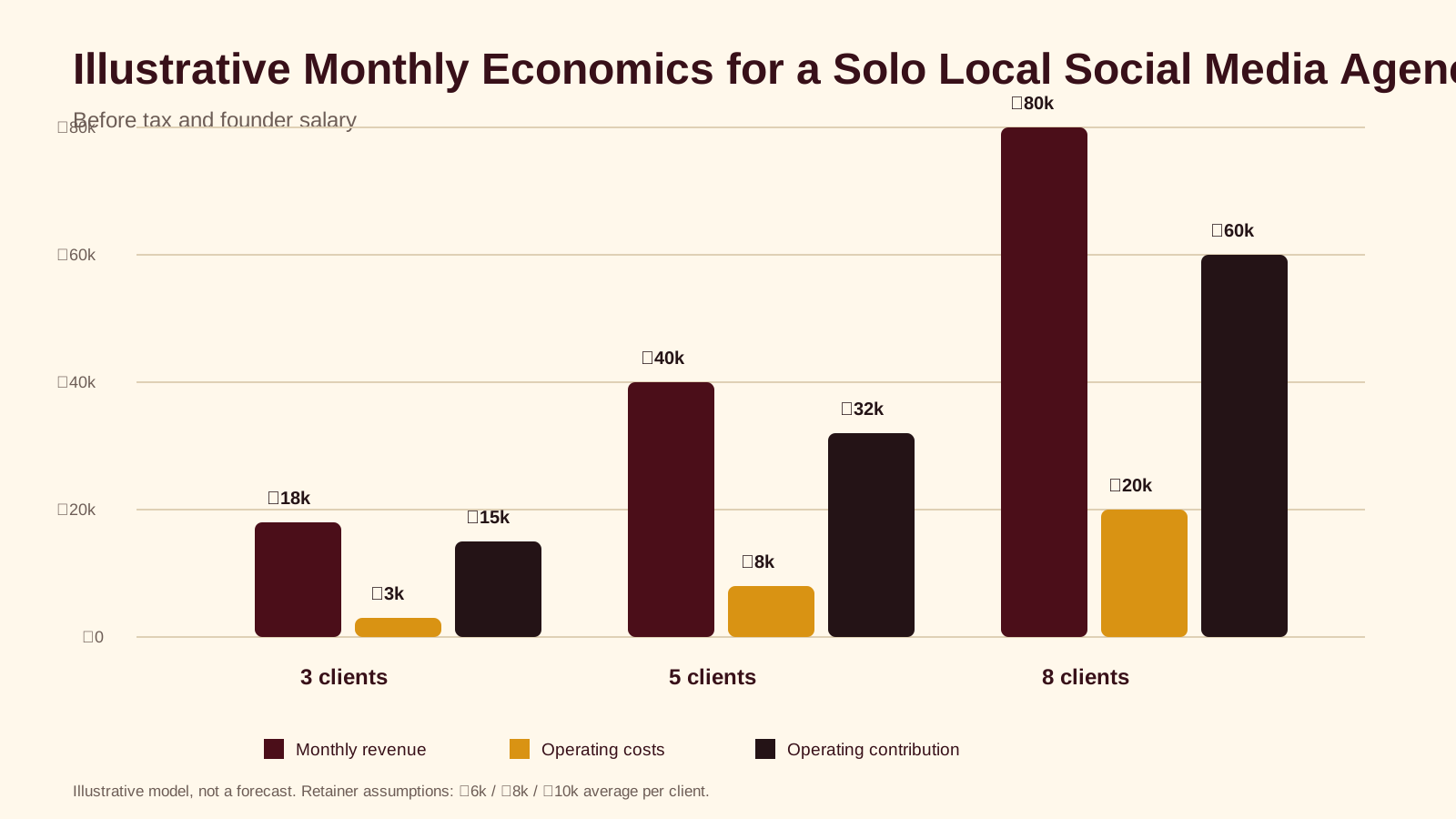
Illustrative model only. It excludes tax and founder salary. Costs can include tools, travel, internet, storage, freelancers and production.
Time changes the calculation. A client paying ₹10,000 while consuming 50 hours can be economically worse than a client paying ₹7,000 while consuming 12. Track contribution per client and hours per client, not just top-line revenue.
Step 7: deliver through a repeatable monthly system
Week 1
Collect offers, product information, photographs and video. Review last month's performance and build the next content calendar.
Week 2
Produce graphics and videos, write copy and get approvals in batches instead of chasing approval every day.
Week 3
Publish consistently, monitor basic engagement, test offers and record enquiries.
Week 4
Finish scheduled content, prepare a short performance report and decide what should change next month.
What should the monthly report contain?
- Reach and profile visits
- Follower growth where relevant
- Website or WhatsApp clicks
- Calls, enquiries, bookings or leads the client can attribute
- Top-performing posts and Reels
- Google actions or reviews where available
- Offers tested and what happened
Do not bury a local owner under thirty pages of decorative charts. The report must answer a simple question: did the work create useful attention or business activity?
How do you keep clients?
Retention is where the economics improve. A client paying ₹8,000 for one month is ₹8,000 of revenue. The same client staying for twelve months is ₹96,000 before any upsells, without paying to acquire that client again every month.
Set expectations before onboarding, deliver on schedule, define revision limits, communicate clearly, report what happened and keep testing. Never guarantee followers, virality or sales. Marketing influences results; it does not control the customer's product quality, pricing, staff, location or sales process.
When should you hire?
Do not hire simply because the word “agency” looks lonely without employees. Hire or outsource when capacity has become the actual bottleneck. Video editing and repetitive design production are often sensible early tasks to outsource. Keep sales, client relationships, strategy and quality control close to the founder until the system is stable.
A realistic first 30 days
- Days 1–3: choose one or two niches and define three packages.
- Days 4–7: build three clearly labelled sample projects and a simple portfolio.
- Days 8–10: create a database of 30 local prospects.
- Days 11–20: contact at least three researched prospects per day and record every response.
- Days 21–25: hold meetings, diagnose the business problem and present a defined first-month scope.
- Days 26–30: attempt to close the first paying client and document why they bought, what objections appeared and how much work delivery actually required.
What can kill the business?
- Underpricing labour
- Unlimited revisions
- Trying to serve every niche
- Measuring only followers
- No written scope or payment terms
- Giving away too much free work
- Hiring before revenue supports it
- Promising guaranteed commercial results
The verdict
A local social-media agency is not a revolutionary technology startup. That is one of its strengths. It can be tested without building software, buying inventory or raising capital.
Find businesses with a visible marketing problem. Show the problem clearly. Sell a defined monthly service. Deliver consistently. Measure the result. Retain the clients that remain profitable.
India's digital audience, the size of its small-business base and the growth in SME digital advertising show that the market already exists. The hard part is less cinematic: win the first paying client, serve them well enough to stay, and repeat without letting workload grow faster than profit.